
Residential Solar Rooftop Installation
Power your home with clean, renewable solar energy and reduce monthly electricity bills. Narmada Technologies delivers customized residential solar rooftop solutions with professional installation and long-term performance.
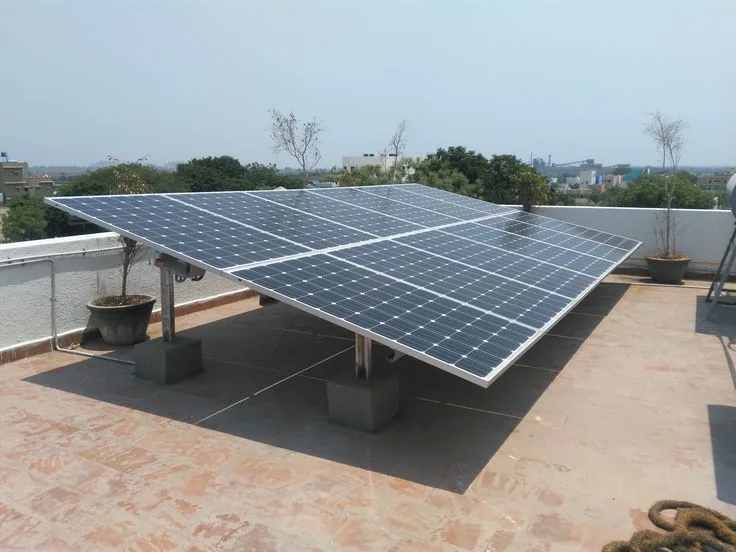
Residential Solar Rooftop Installation in Indore
If you are planning to install solar at your home, the first step is not choosing a panel. It is understanding how much electricity your household uses, how much usable roof space you have, and what size of solar system makes sense for your property.
Narmada Technologies provides residential solar rooftop installation services in Indore, including site assessment, system planning, installation, testing and after-installation support. We help homeowners choose a rooftop solar setup according to their electricity consumption, available roof area and project requirements.
Residential Rooftop Solar for Homes in Indore
A rooftop solar system uses solar panels installed on the roof to generate electricity from sunlight. The electricity produced can be used by the home, while the treatment of excess generation depends on the system configuration and applicable electricity regulations.
For a homeowner, the right system size depends largely on actual electricity consumption. A house using air conditioners, refrigerators, water pumps and other high-load appliances will have a different requirement from a smaller household.
That is why we assess the property before recommending a system.
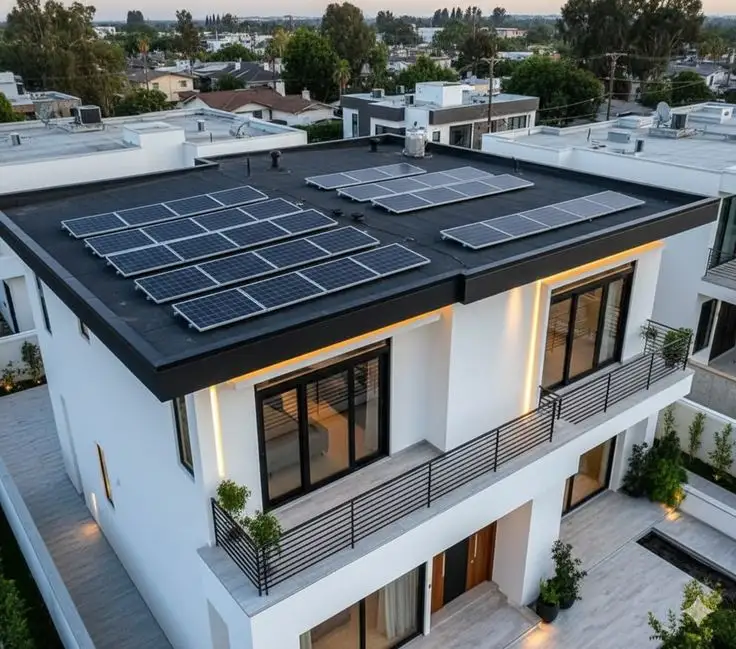
How Do We Plan a Residential Solar System?
A typical residential solar project starts with understanding the home’s electricity usage and the condition of the roof.
We look at factors such as:
Recent electricity consumption
Available rooftop area
Roof orientation and usable space
Possible shade from nearby buildings or structures
Electrical connection and load
Preferred solar capacity
Future electricity requirements
Installation and access conditions
This information helps determine whether the proposed system is suitable for the property and where the panels can be installed.
Residential Solar Rooftop Installation Process
Installing solar is more than fixing panels on a roof. The mounting structure, wiring, inverter, protection equipment and connection to the home’s electrical system all need to work together.
Site Assessment
We first understand the property and inspect the available roof area. Shade, access, roof condition and installation space are considered at this stage.
Electricity Usage Review
Recent electricity bills help us understand the household’s consumption pattern. This provides a starting point for estimating the required solar capacity.
System Design
The solar system is planned according to the property’s roof area, electricity requirement and selected capacity. Panel placement and other installation requirements are considered before work begins.
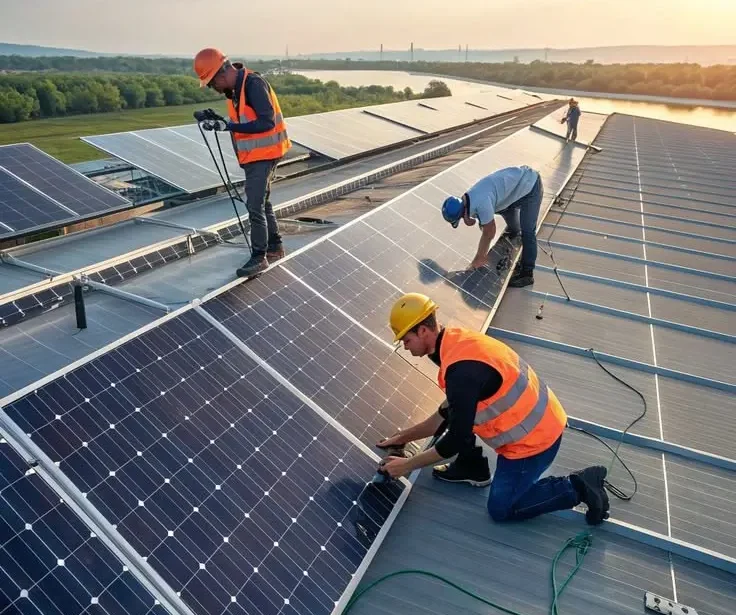
Solar Installation
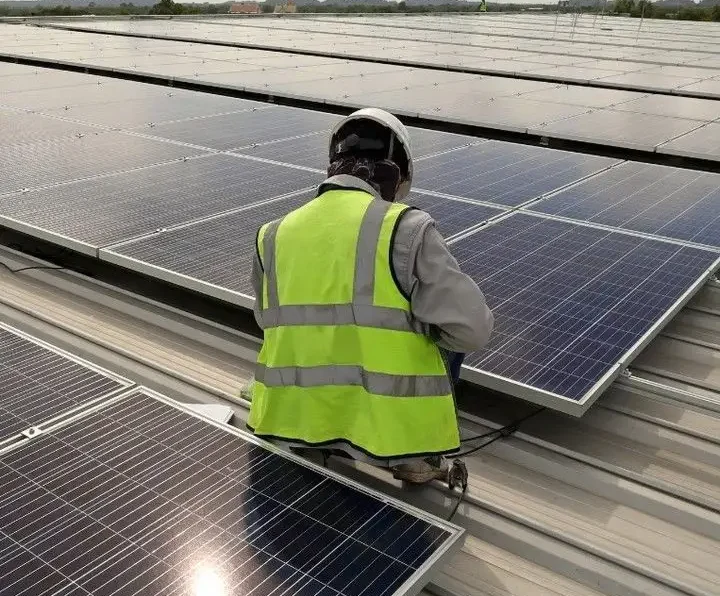
The mounting structure, solar panels, inverter, cabling and required protection equipment are installed according to the approved system design.
Testing & Commissioning
After installation, the system is checked to ensure the panels, inverter, electrical connections and protection components are functioning correctly.
Grid Connection & Documentation
Where a grid-connected system is selected, the required electricity-distribution and net-metering procedures are followed according to the applicable process.
After-Installation Support
Once the system is operational, we remain available for service, maintenance and technical support as required.
How Much Rooftop Solar Does a Home Need?
There is no single solar capacity that is right for every house.
A practical starting point is the home’s electricity consumption. Your recent electricity bills can show how much power the household typically uses, while the roof inspection tells us how much solar capacity can realistically be installed.
For example, a house with relatively low electricity consumption may not need the same system as a larger home with several air conditioners and other high-consumption appliances.
The final capacity should therefore be decided after reviewing electricity usage and the site rather than choosing a system only by its panel count.
How Do We Plan a Residential Solar System?
A typical rooftop solar installation may include:
Solar PV panels
Mounting structure
Solar inverter
DC and AC cables
Electrical protection devices
Earthing and related safety components
Monitoring arrangement, where applicable
Grid connection components for on-grid systems
The exact equipment depends on the type and capacity of the system selected for the property.
On-Grid Solar for Residential Properties
An On-Grid Rooftop Solar System is connected to the home’s electricity network. Solar generation can be used by the household, with excess generation handled through the applicable grid and metering arrangement.
For homeowners considering an on-grid system, it is important to understand the local electricity-distribution requirements before installation.
Narmada Technologies can assist with the system planning and installation process for residential rooftop solar projects in Indore.
Why Install Solar on Your Home?
For many homeowners, the main reason for considering rooftop solar is the cost of electricity.
A properly sized system can generate part of the electricity required by the household and reduce dependence on electricity purchased from the grid. The amount of electricity generated varies according to system capacity, sunlight, shading, weather, orientation and other site conditions.
Solar can also turn otherwise unused roof space into a productive part of the home’s energy setup.
Residential Solar Installation in Indore
Indore homes have different roof layouts, electricity consumption patterns and installation conditions. A system that works for one property may not be suitable for another.
Local site assessment is therefore important before finalizing the panel layout and system capacity.
Narmada Technologies provides residential solar rooftop installation in Indore for homeowners looking to plan and install solar according to their property’s requirements.
Why Choose Narmada Technologies?
Narmada Technologies works across residential, commercial and industrial solar applications and lists 8+ years of experience in the heating and solar industry. The company provides project support from planning through installation and also offers solar maintenance services.
For a residential rooftop project, our support can include:
Initial requirement discussion
Rooftop assessment
Solar system planning
Capacity recommendation
Installation
Testing and commissioning
Technical support
Maintenance assistance
The exact scope of work can be discussed based on the property and selected solar system.
Frequently Asked Questions
The required capacity depends mainly on your electricity consumption, available roof space and the type of system being considered. Recent electricity bills and a site assessment provide a better basis for selecting the capacity.
Not every roof is equally suitable. Available area, shade, roof condition, orientation, access and structural considerations should be checked before installation.
Solar panels can still generate electricity when there is daylight and sunlight, but generation can be lower under cloudy conditions.
The installation time depends on system size, roof conditions, equipment availability and any required grid or documentation process. The project timeline can be confirmed after the site and system requirements are reviewed.
Yes, grid-connected rooftop solar systems are commonly used for homes. The applicable connection and metering requirements need to be followed for the property.
Solar systems generally require periodic inspection and cleaning. Electrical connections, mounting components, inverter operation and other system components should also be checked as required.
Plan Your Residential Solar Installation in Indore
Share your recent electricity bill, property location and approximate rooftop details with Narmada Technologies. We can review your requirement and discuss a suitable residential solar system for the property.